Ad in: Mumbai, India - Advertising
Flue Damper Market Set to Surpass $2.8 Billion by 2033 with 5.9% CAGR Amid Rising Energy Efficiency Demand - Price: Rs. 4200
Ad # 993523
The global Flue Damper
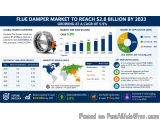
market was valued at approximately $1.6 billion in 2024 and is projected to reach $2.8 billion by 2033, expanding at a CAGR of 5.9% during the forecast period. Increasing adoption of energy-efficient HVAC systems, coupled with stricter emission regulations, has driven a 7.2% year-over-year growth from 2023 to 2024. Industrial applications account for nearly 46% of total demand, while residential usage contributes around 28%.
Over the past decade, the Flue Damper market has demonstrated steady expansion. In 2016, the market size stood at $1.05 billion, growing to $1.18 billion in 2018, and reaching $1.42 billion by 2021. Between 2021 and 2024, the market recorded an average annual growth rate of 6.3%, driven by increasing investments in building automation systems. Year-over-year growth rates include 5.4% in 2020, 6.1% in 2021, 6.8% in 2022, and 7.2% in 2024.
The industrial sector remains the dominant contributor to the Flue Damper market, with power plants and manufacturing facilities accounting for over $740 million in revenue in 2024. Demand from thermal power plants alone grew by 6.7% year-over-year due to stricter emission norms. Meanwhile, commercial infrastructure projects such as malls and office complexes contributed approximately $390 million, reflecting a 5.8% annual growth.
Regionally, North America holds a 34% share of the global Flue Damper market, valued at $544 million in 2024. The region has experienced a CAGR of 5.2% since 2018, supported by energy efficiency mandates. Europe follows with a 29% share, equivalent to $464 million, driven by environmental regulations and retrofitting initiatives. The Asia-Pacific region is the fastest-growing, with a CAGR of 7.4%, increasing its market size from $310 million in 2020 to $472 million in 2024.
Government investments have played a significant role in market expansion. Globally, over $120 billion has been allocated toward green building initiatives between 2020 and 2024, with approximately 12% indirectly supporting HVAC efficiency technologies, including Flue Dampers. In India, government spending on smart city projects exceeded $30 billion, contributing to a 9.1% growth in HVAC component demand. Similarly, the U.S. allocated $18 billion toward building energy efficiency upgrades in 2023 alone.
Technological advancements have enhanced product efficiency and adoption rates in the Flue Damper market. Automated dampers accounted for 38% of total sales in 2024, up from 24% in 2018, reflecting a compound growth of 8.6%. Smart dampers integrated with IoT systems have seen a 12.4% annual increase in adoption, particularly in commercial buildings. Additionally, stainless steel dampers dominate material usage, representing 52% of production volume due to durability and corrosion resistance.
From a production standpoint, global Flue Damper manufacturing output reached approximately 18.6 million units in 2024, compared to 14.2 million units in 2019, indicating a 31% increase over five years. China leads production with a 41% share, followed by the United States at 18% and Germany at 11%. Export volumes grew by 6.5% annually, with Asia-Pacific contributing over 48% of global exports.
Key industry players have reported notable revenue growth. Leading manufacturers recorded combined revenues exceeding $820 million in 2024, with top companies individually achieving annual growth rates between 5.5% and 7.8%. Investment in R&D increased by 9.3% year-over-year, reaching $110 million globally, focusing on improving energy efficiency and automation capabilities.
The residential segment has also shown consistent growth, with market size increasing from $310 million in 2019 to $448 million in 2024, representing a CAGR of 7.6%. Rising awareness of energy savings has driven adoption, with surveys indicating that 62% of homeowners consider energy efficiency a top priority when upgrading heating systems. Additionally, installation of Flue Dampers in residential HVAC systems can improve energy efficiency by up to 15–20%.
Year-over-year comparisons highlight steady demand growth across segments. Industrial demand increased by 6.7% in 2023 and 7.1% in 2024, while commercial demand rose by 5.3% and 5.8% respectively. Residential growth remained strong at 6.9% in 2023 and 7.4% in 2024. These consistent gains indicate a balanced expansion across end-use sectors.
Looking ahead, the Flue Damper market is expected to witness accelerated growth between 2025 and 2033. Market size is projected to reach $1.75 billion in 2026, $2.1 billion by 2028, and $2.8 billion by 2033. The Asia-Pacific region is forecasted to achieve a CAGR of 7.9%, increasing its market share to 31% by 2033. North America and Europe are expected to maintain steady growth rates of 5.1% and 4.8%, respectively.
Emerging trends such as smart buildings and carbon neutrality targets are expected to drive further demand. Global investment in smart building technologies is projected to exceed $500 billion by 2030, with HVAC components accounting for approximately 18% of total spending. This trend is anticipated to boost Flue Damper adoption by 10–12% annually in advanced economies.
In conclusion, the Flue Damper market demonstrates robust growth supported by rising energy efficiency requirements, regulatory pressures, and technological advancements. With a projected increase from $1.6 billion in 2024 to $2.8 billion by 2033, and consistent CAGR of 5.9%, the market is positioned for sustained expansion. Strong production growth, increasing adoption of smart dampers, and significant government investments further reinforce its upward trajectory.
Read Full Research Study: https://marketintelo.com/report/flue-damper-market
Your message has been sent
market was valued at approximately $1.6 billion in 2024 and is projected to reach $2.8 billion by 2033, expanding at a CAGR of 5.9% during the forecast period. Increasing adoption of energy-efficient HVAC systems, coupled with stricter emission regulations, has driven a 7.2% year-over-year growth from 2023 to 2024. Industrial applications account for nearly 46% of total demand, while residential usage contributes around 28%.
Over the past decade, the Flue Damper market has demonstrated steady expansion. In 2016, the market size stood at $1.05 billion, growing to $1.18 billion in 2018, and reaching $1.42 billion by 2021. Between 2021 and 2024, the market recorded an average annual growth rate of 6.3%, driven by increasing investments in building automation systems. Year-over-year growth rates include 5.4% in 2020, 6.1% in 2021, 6.8% in 2022, and 7.2% in 2024.
The industrial sector remains the dominant contributor to the Flue Damper market, with power plants and manufacturing facilities accounting for over $740 million in revenue in 2024. Demand from thermal power plants alone grew by 6.7% year-over-year due to stricter emission norms. Meanwhile, commercial infrastructure projects such as malls and office complexes contributed approximately $390 million, reflecting a 5.8% annual growth.
Regionally, North America holds a 34% share of the global Flue Damper market, valued at $544 million in 2024. The region has experienced a CAGR of 5.2% since 2018, supported by energy efficiency mandates. Europe follows with a 29% share, equivalent to $464 million, driven by environmental regulations and retrofitting initiatives. The Asia-Pacific region is the fastest-growing, with a CAGR of 7.4%, increasing its market size from $310 million in 2020 to $472 million in 2024.
Government investments have played a significant role in market expansion. Globally, over $120 billion has been allocated toward green building initiatives between 2020 and 2024, with approximately 12% indirectly supporting HVAC efficiency technologies, including Flue Dampers. In India, government spending on smart city projects exceeded $30 billion, contributing to a 9.1% growth in HVAC component demand. Similarly, the U.S. allocated $18 billion toward building energy efficiency upgrades in 2023 alone.
Technological advancements have enhanced product efficiency and adoption rates in the Flue Damper market. Automated dampers accounted for 38% of total sales in 2024, up from 24% in 2018, reflecting a compound growth of 8.6%. Smart dampers integrated with IoT systems have seen a 12.4% annual increase in adoption, particularly in commercial buildings. Additionally, stainless steel dampers dominate material usage, representing 52% of production volume due to durability and corrosion resistance.
From a production standpoint, global Flue Damper manufacturing output reached approximately 18.6 million units in 2024, compared to 14.2 million units in 2019, indicating a 31% increase over five years. China leads production with a 41% share, followed by the United States at 18% and Germany at 11%. Export volumes grew by 6.5% annually, with Asia-Pacific contributing over 48% of global exports.
Key industry players have reported notable revenue growth. Leading manufacturers recorded combined revenues exceeding $820 million in 2024, with top companies individually achieving annual growth rates between 5.5% and 7.8%. Investment in R&D increased by 9.3% year-over-year, reaching $110 million globally, focusing on improving energy efficiency and automation capabilities.
The residential segment has also shown consistent growth, with market size increasing from $310 million in 2019 to $448 million in 2024, representing a CAGR of 7.6%. Rising awareness of energy savings has driven adoption, with surveys indicating that 62% of homeowners consider energy efficiency a top priority when upgrading heating systems. Additionally, installation of Flue Dampers in residential HVAC systems can improve energy efficiency by up to 15–20%.
Year-over-year comparisons highlight steady demand growth across segments. Industrial demand increased by 6.7% in 2023 and 7.1% in 2024, while commercial demand rose by 5.3% and 5.8% respectively. Residential growth remained strong at 6.9% in 2023 and 7.4% in 2024. These consistent gains indicate a balanced expansion across end-use sectors.
Looking ahead, the Flue Damper market is expected to witness accelerated growth between 2025 and 2033. Market size is projected to reach $1.75 billion in 2026, $2.1 billion by 2028, and $2.8 billion by 2033. The Asia-Pacific region is forecasted to achieve a CAGR of 7.9%, increasing its market share to 31% by 2033. North America and Europe are expected to maintain steady growth rates of 5.1% and 4.8%, respectively.
Emerging trends such as smart buildings and carbon neutrality targets are expected to drive further demand. Global investment in smart building technologies is projected to exceed $500 billion by 2030, with HVAC components accounting for approximately 18% of total spending. This trend is anticipated to boost Flue Damper adoption by 10–12% annually in advanced economies.
In conclusion, the Flue Damper market demonstrates robust growth supported by rising energy efficiency requirements, regulatory pressures, and technological advancements. With a projected increase from $1.6 billion in 2024 to $2.8 billion by 2033, and consistent CAGR of 5.9%, the market is positioned for sustained expansion. Strong production growth, increasing adoption of smart dampers, and significant government investments further reinforce its upward trajectory.
Read Full Research Study: https://marketintelo.com/report/flue-damper-market